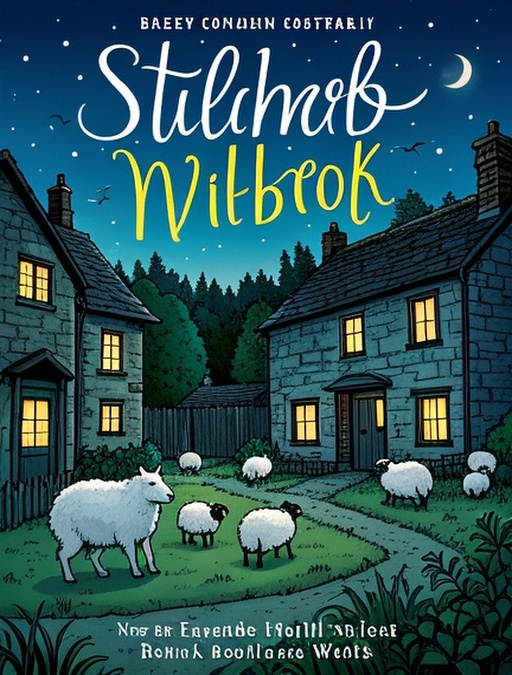
I still remember my first night in Millbrook like it was tattooed on the inside of my eyelids. I’d rolled in with one suitcase, a second-hand badge that said “Constable,” and a head full of city logic. No room for ghosts, goblins, or, heaven forbid, werewolves. The plan was simple: keep my nose clean, serve my two-year probation, then bounce back to London where the worst monster is rush-hour traffic.
Problem was, the village had other plans. See, Millbrook hugs the edge of Blackroot Forest the way a kid hugs a scary bedtime story—tight, even though it gives ’em shivers. Locals kept yapping about the “Moon Festival,” some centuries-old shindig where everyone locks doors at dusk, drinks honey-whiskey till they’re blurry, and pretends the howling outside is just the wind. I laughed. Wind doesn’t sound like a chainsaw gargling gravel, but whatever helps you sleep, right?
First clue something was off? The sheep. Farmer Hoggett stormed into the station at dawn, boots caked with mud and eyes wilder than his uncombed hair. “Constable, I’m missin’ three ewes,” he spat. “No blood, no bones, just… gone.” I followed him to the field. No tire tracks, no footprints, just wool snagged on the fence like someone ripped ’em straight into the sky. My city brain said “rustlers,” but my gut—yeah, that little traitor—whispered “wolf.”
Second night, I’m sipping lukewarm coffee in the station when Mrs. Dalloway, the librarian who smells of lavender and dust, shuffles in clutching a book older than the Queen. She drops it on my desk with a thud. “You’ll need this,” she mutters. Title’s in Latin, something like “Lupus Hominis Nocturne.” I flip it open. There’s a sketch of a dude mid-change: human face stretching, teeth popping like popcorn, fingers splitting into claws. Cute bedtime reading. I thank her, slide it into a drawer, and forget about it. Almost.
Third night, the power cuts. Whole village goes black. I step outside with my torch, and that’s when I hear it—howl, low and long, curling around the cottages like smoke. Every dog in Millbrook answers, a chaos of barks and whines. My hand drifts to the radio, but static’s the only reply. Then comes the scream. Not a drunk “I lost my shoe” scream, but the raw, tearing kind that peels your nerves back. I run toward it, boots slipping on wet cobblestones.
I round the corner by the church and nearly trip over Alfie, the baker’s boy. He’s on his back, shirt shredded, eyes rolled white. Across his chest: four parallel gashes, too neat for a bear, too wide for a dog. He’s breathing, barely. I sling him over my shoulder, haul him to the clinic, all while scanning shadows that seem to breathe. Doc says “animal attack,” but her voice shakes like a leaf in a blender.
Next morning, the mayor calls a town meeting in the pub because where else do you plan survival? Old Man Hemlock, who’s got a beard full of breadcrumbs and stories full of crazy, stands up. “It’s the curse,” he croaks. “Every thirty years, the wolf walks upright. Needs three bites to turn fully human again. Then it hides among us till the next moon.” Everyone nods like he’s reading the weather. I snort. “So we’re hunting a furry Houdini?” No one laughs.
That night I dig out the Latin book, translate by phone light and sheer stubbornness. Turns out the curse isn’t just folklore; it’s a parasite living in the blood. Silver weakens it, but to break it you gotta find the “first bite,” the original host. Great. No name, no address, just “look for the one who doesn’t age.” Super helpful in a town where half the pensioners claim they’re 200.
I start watching faces. Who flinches at silver? Who’s too smooth for their years? My list grows: the postman who never takes his gloves off, the barmaid with the weirdly perfect teeth, the vicar who quotes medieval poetry like he wrote it. Paranoia’s a fun house mirror; everyone looks monstrous.
Full moon creeps closer. Alfie wakes up, whispers “it talked” before slipping back under. Talking wolf? Cool, cool, definitely not nightmare fuel. I patrol with a borrowed shotgun loaded with silver coins I melted in the pub’s oven. Smells like money and desperation.
Final night, sky’s a swollen pearl. I’m walking the forest edge when I spot footprints—human leading in, wolf leading out. I follow, heart drumming louder than my steps. Deep in the clearing stands Mrs. Dalloway, hair unbound, eyes glowing like coals. She smiles, way too many teeth. “You read my book,” she purrs. “Took you long enough.”
She lunges. I fire. Coin-shot scatters, catches her shoulder. She screams, half howl, half opera. The change rips through her, skin splitting, bones cracking back. For a second she’s just a scared girl in tattered robes, then the wolf rears again. We wrestle, mud and blood smoothie. I’m losing. She’s millimeters from my throat when the church bell tolls—midnight. The sound hits her like lightning; she freezes, howls at the sky, and bolts into the trees.
Dawn finds me slumped against an oak, silver burns on my hands, heart doing the tango. I stagger back to town. Folks cheer like we won a football match. I don’t feel like a hero; I feel like a guy who poked a bear and got lucky. We board up the forest path, swear off moon festivals, and pretend the scratches on doors are just wood rot.
But every so often, when the wind smells of pine and the dogs get quiet, I swear I hear her out there, waiting for the bell to break. And I keep that silver-loaded shotgun under my bed, because city logic doesn’t live here anymore. Millbrook taught me one thing: some stories wear your neighbor’s face, and the only way to survive is to believe the impossible—then aim for the heart.