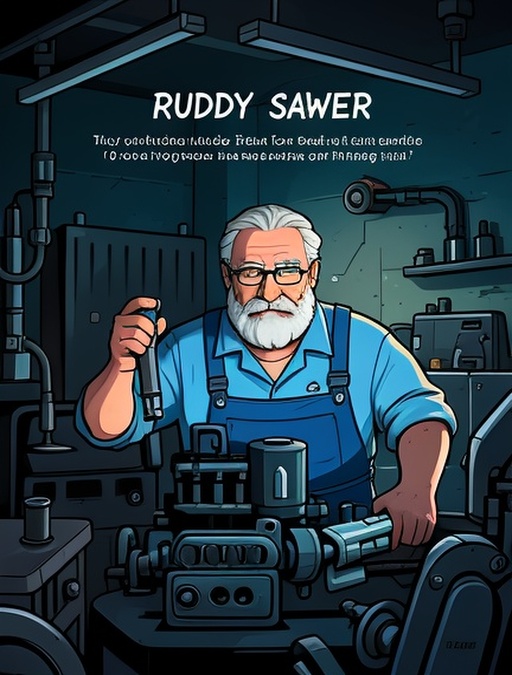
I’m Lila, twenty-three, grease in my veins instead of blood. Dad left me his two-bay garage on Mill Lane, brick walls black with fifty years of exhaust. Folks say it’s haunted, but I say everything’s haunted if you stare long enough. Still, the night the wrench whispered, I nearly dropped my flashlight.
It started with Mrs. Kowalski’s ’92 Buick. Car cranked but wouldn’t catch, like it was holding its breath. I replaced plugs, wires, even the dizzy cap—nothing. By nine p.m. I was alone, radio humming old rock, the kind Dad sang off-key. That’s when I felt the cold spot, right behind the bench vise, summer night and breath fogging.
I turned, nobody there. Figured the soda machine busted again. Then the 19-mill wrench slid off the pegboard, slow like someone set it down gentle. Clink. I picked it up, set it back. Same wrench, same peg, same shadow. I bent over the Buick again and—clink—there it was on the concrete, pointing at the engine like an accusing finger.
“Quit it,” I told the empty shop. My voice cracked like a cheap socket. The fluorescent bulb flickered, stuttered, then steadied. I grabbed the wrench, felt it twitch, tiny vibration, like a phone on silent. I told myself it was the compressor kicking in, but compressors don’t whisper: “Left side, third bolt.”
I froze. The Buick’s left valve cover had a third bolt missing; I’d overlooked it in the dark. I shoved the wrench against it, half expecting it to fight. Instead it snugged perfect, torque spec singing in my wrist. Engine turned over first try, purring like a cat that knew secrets. I should’ve gone home. I didn’t.
Midnight now, doors locked, curiosity hotter than a headers burn. I lifted the wrench close to my ear. “Who’s there?” Static silence, then a sigh—metal fatigue, almost tender. The pegboard rattled; every tool swayed like seaweed. I backed up, heart hammering louder than an impact gun. The lights died.
Dark so thick I tasted iron. I clicked my phone torch, beam shaking across Dad’s old calendar: 1999, girls and carburetors. A shape stood by the hoist, overalls stained, face nothing but shadow and oil. “Lila,” it rasped, “you kept her running.” Dad? Couldn’t be; we buried him behind the church when I was sixteen. But the voice had his Marlboro gravel.
I wanted to run, feet glued in coolant. The figure raised an arm—no hand, just dangling sockets clicking together. “Left side, third bolt,” it repeated, same phrase the wrench had sighed. Then I got it: not a ghost, not exactly. Memory soaked into steel, years of skinned knuckles and busted dreams. Dad’s frustration, his pride, every busted starter he coaxed back to life—trapped in chrome vanadium.
I stepped closer, smell of ether and aftershave. “You trying to teach me, old man?” The shape nodded, or maybe the light jerked. I felt calm, weirdly, like torque specs finally matching. “Alright,” I said, “show me.” The hoist groaned, lifting nothing, but beneath it lay a crate I’d never seen: dusty, stenciled “RUDY—DO NOT OPEN TILL SHE’S READY.”
Inside, a beat-up coffee can full of sockets, and a photo: Dad, younger than me, arm around a woman I didn’t know—definitely not Mom. On the back, scribbled: “Left side, third bolt—holds the heart together.” My throat burned. Maybe the shop kept more than broken cars; maybe it kept broken people too.
I placed the whispering wrench back on its peg. “Thanks, Dad. I got it from here.” Lights snapped on, shape gone, compressor humming innocent. I locked up, walked home under humming streetlights, wrench voice quiet but present, like tinnitus of the soul.
Next morning, the Buick sat purring, customer happy. I kept the crate, bolted it under the bench. Sometimes, late shift, I hear that soft clink, and I smile. Every mechanic knows machines remember; you just gotta listen past the racket. And if a tool tells you to check the left side, third bolt—you damn well check. Because love, like engines, needs the right torque or it rattles apart.