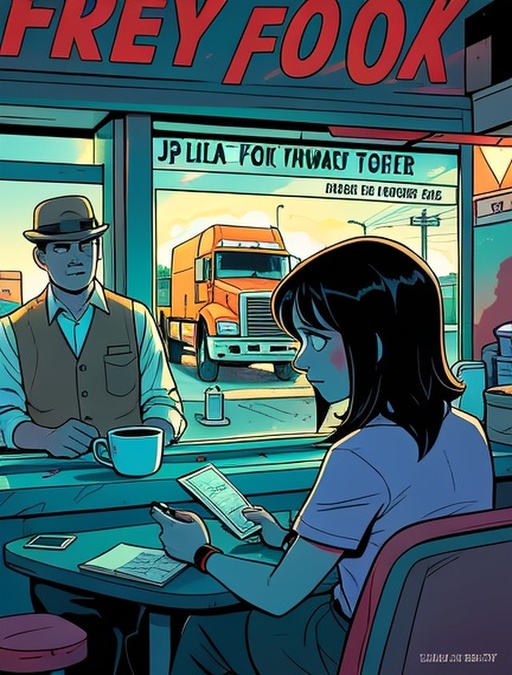
I never meant to work the night that changed everything; I just needed the extra twenty bucks. Mom’s rent was late again, so when my manager texted “Can u cover 12-6?” I typed back “sure” without thinking. The Moonrise Diner squats alone on Route 17, half-way between nowhere and the state line, surrounded by corn that whispers like it’s gossiping about you. I pulled up at 11:58, headlights cutting through fog thick as milk, and the neon OPEN sign buzzed like a dying mosquito.
Inside smelled of burnt coffee and the cinnamon candles Frank lights to hide the grease. Frank himself was wiping the counter with the same rag he’d used since I started, moving slow because, as he always says, “Nothing good happens after two a.m.” He handed me the apron, looked me dead in the eye and whispered, “If a guy in the corner booth asks for the special, you give it to him, no questions.” Then he grabbed his coat, muttered something about needing to “walk his dog,” and left me alone with the hum of freezers. I figured the special was just the last slice of pecan pie; turns out the diner keeps older recipes on hand.
The first three hours crawled. A couple of truckers slurped chili, paid in crumpled fives, and rolled out. At 3:12 the bell above the door jingled and in walked the man who don’t cast a shadow. I noticed it right away because the overhead fluorescents should’ve thrown stripes on the floor, but nothing followed him—like the light hit an empty coat. He wore a charcoal suit shiny at the elbows, hair slicked back so tight it could’ve been painted on. His eyes were the gray of old dishwater, calm but hungry somehow, like he’d already seen the dessert menu of your life.
He sat in booth four, the one kids carve hearts into when they think nobody’s looking, and tapped the laminated menu once. I walked over, trying not to stare at the missing shadow, and asked what I always ask: “Coffee while you decide?” He smiled, polite as Sunday dinner, and said, “Make it still warm from the vein, sweetheart.” I laughed, because who talks like that, right? But my laugh cracked in the middle; the air around him felt colder than the walk-in fridge. I poured him a mug anyway, hands shaking so bad the pot clinked the rim. He took a sip, winced like it was bitter, then pushed the cup aside and said, “I’ll wait for the special.”
My phone had zero bars, typical for the middle of corn country, so I couldn’t google what the hell “still warm from the vein” meant. I checked the whiteboard where Frank writes daily specials: MEATLOAF PLATE 6.99. Nothing else. I opened the freezer hoping for a hidden pie labeled “for vampires only,” but only saw frost and boxes of frozen fries. When I turned back, the man was standing right at the pass-through window, closer than footsteps allow, holding out a silver dollar so old the eagle looked skinned. “Time is thinning, Lila,” he said, and I swear he never moved his lips to learn my name.
I should’ve run, but my sneakers felt glued to the rubber mats. He placed the coin on the counter; it spun like a tiny carousel and stopped dead, showing a date: 1894. “That’s the year this diner first poured coffee for my kind,” he continued, voice soft as cobweb. “Every thirty years we return, pay our tab, and pick a new server. Congratulations, you’re hired.” He said it the way people say “your table’s ready,” like there’s no argument. My throat closed; I pictured Mom at home, counting quarters for bus fare, and knew I couldn’t leave her short. Maybe if I played along till sunrise, daylight would burn this creep to ash like in the movies.
He returned to booth four. I grabbed the biggest knife we had, the one we use to hack frozen burger blocks, and hid it under my apron. Minutes stretched like mozzarella. At 4:37 the bell rang again and three more customers entered: a woman in a prom dress tattered at the hem, a teenage boy whose ears dripped what looked like melted wax, and an old farmer chewing straw that wasn’t straw. None cast shadows. They nodded at the man, then at me, like I was the new kid on the first day of spooky school. They sat separate but leaned inward, forming a circle of hunger that made the bulbs flicker.
I decided to keep busy, because idle hands get bitten. I brewed fresh pots, restocked ketchup, anything to stay behind stainless steel. The woman waved me over, pointed at the napkin dispenser, and when I reached to refill it she caught my wrist. Her fingers were ice cubes wrapped in silk. “You smell like iron and worry,” she whispered, eyes glowing red for a blink. “That means you’re still alive. Try to keep it that way.” She let go, leaving white marks that didn’t warm up even when I rubbed them hard.
The man in the suit clapped once, polite golf applause. “Lila, bring the special now,” he ordered. My feet walked even though my brain screamed. I opened the fridge and there, on a middle shelf that earlier held nothing but lettuce, sat a single glass bottle filled with thick red liquid. A tag dangled: FOR OUR GUEST. My stomach flipped like a pancake, but I carried the bottle out, set it on his table, and stepped back so fast I bumped into the pie carousel. He uncorked it, sniffed, smiled. “Farm-fresh, 1993 vintage. A fine year.” The others watched, tongues sliding over lips.
He poured the stuff into a coffee mug, raised it in toast to me, and drank. I heard a sound like wind sucking through broken glass. The diner lights dimmed; the EXIT sign sputtered. When he finished, he placed a tip on the table—not dollars, but a ruby the size of a gumball, shining like it held a tiny sun. “For your mother’s rent,” he said, proving he could read minds or maybe just overdue notices. “We’ll see you next month, same booth. Bring no garlic, no crosses, no silly wooden stakes. They bounce off, and the cleanup annoys me.”
I wanted to refuse, but the ruby glowed, promising heat and electricity bills paid. I nodded, a lie in my throat. He stood, adjusted his tie, and walked out. The others followed, single file, leaving behind the smell of old earth after rain. As the door shut, their shadows suddenly appeared on the wall, stretching long and thin, waving goodbye like party streamers. I locked up, hands trembling so hard the keys jingled a song I never want to dance to again.
Sunrise came at 6:03, painting the windows gold. Frank returned, saw the ruby, and didn’t ask questions—just pocketed the gem and said, “Told you the tips are better at night.” I quit on the spot, threw my apron at him, and drove home while the sky turned pink and safe. But here’s the kicker: next month’s calendar page flipped by itself this morning, landing on the 17th, circled in red like a bite mark. The ruby sits on my dresser, humming low, counting down. Mom’s rent is covered, but I’m starting to crave iron—like, literally lick pennies. So if you ever find yourself on Route 17 and the Moonrise sign buzzes at you, keep driving. The coffee’s free, but the special costs more than money; it costs the warm part of your pulse you never notice until it’s on the menu.